
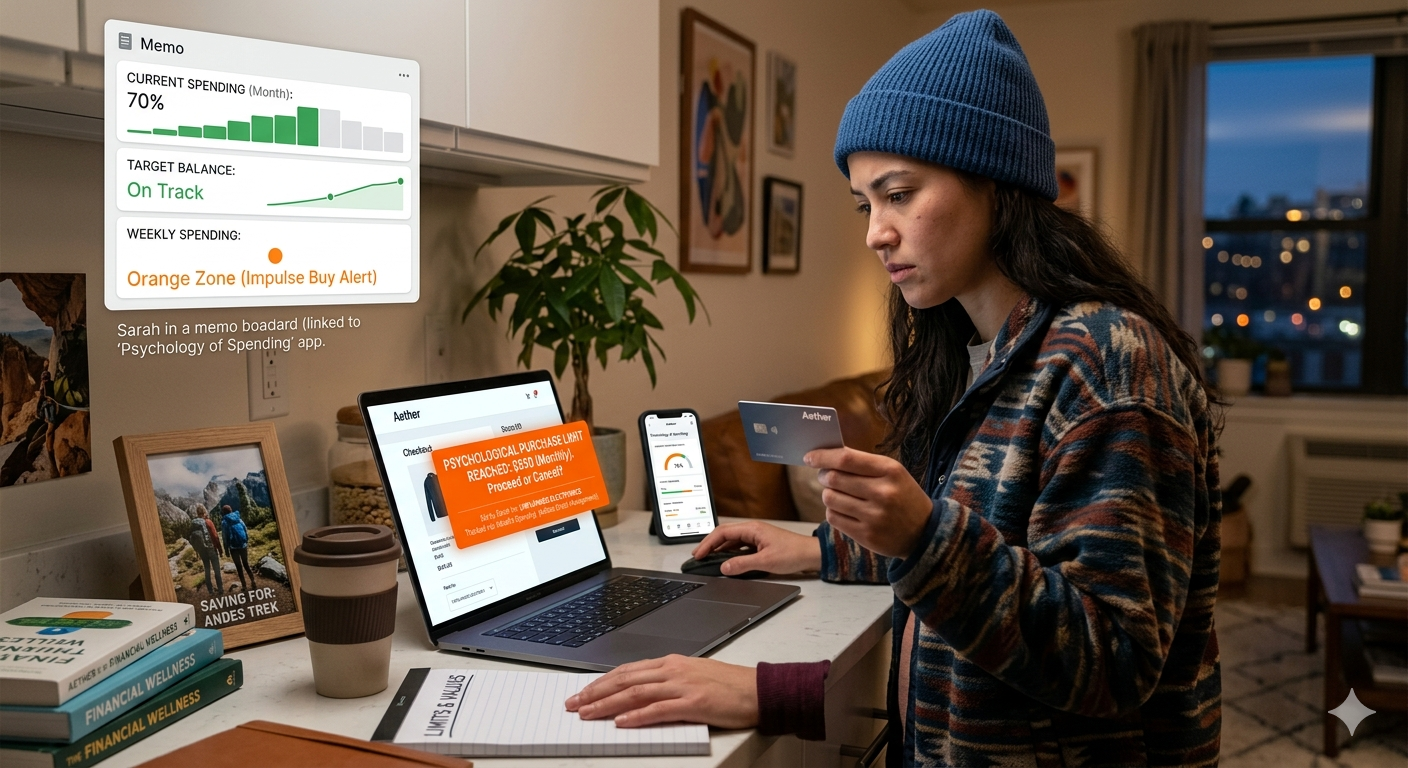
You’re scrolling through limited edition sneakers and you see it: ‘Only 2 per customer.’
Your first instinct is to add 2. Maybe you only wanted 1. But knowing you can’t buy more makes you want to. This is not a bug in human psychology. This is the feature.
Purchase limits work, but not for the reasons most merchants think. They don’t work because they control inventory. They work because they’re a psychological tool that activates something deep in how people make decisions.
The Science of Scarcity
Psychologist Robert Cialdini called scarcity one of the six universal principles of influence. When something is limited, we perceive it as more valuable. The limit itself becomes data. The fact that you can’t have unlimited quantities tells your brain that other people must want it, or the merchant wouldn’t limit it.
But here’s the nuance that most people miss: the limit needs to feel credible. If you say ‘Only 1 left in stock,’ and there are 500 units sitting in your warehouse, the limit means nothing. The psychological effect only works if the customer believes the limit is real.
When you set a limit based on actual business logic, the limit becomes credible. ‘Only 2 per customer so everyone gets a fair chance’ makes sense. The customer can see the reasoning. They believe it. And because they believe it, the psychological effect kicks in.
Loss Aversion and the Fear of Missing Out
Behavioral economics has discovered that humans are loss-averse. We feel the pain of losing something more acutely than the pleasure of gaining something equivalent.
When you see ‘Only 2 per customer,’ your brain doesn’t just register the opportunity to buy. It registers the risk of not buying. You might come back tomorrow and find they’re sold out. You might regret not buying 2. Your loss aversion kicks in and pushes you to buy more than you originally intended.
This is FOMO in a psychological wrapper. The limit creates the possibility of loss. Your brain prioritizes avoiding loss, so the limit becomes a motivator to purchase.
The toilet paper crisis of 2020 was the ultimate demonstration of this principle. The moment stores put limits on toilet paper (3 packages per customer), panic buying accelerated. The limit itself signaled scarcity, which activated loss aversion, which drove more purchases than if there had been no limit at all.
Psychological Reactance
There’s another effect at play, especially with price-sensitive or contrarian customers. Psychologists call it reactance, the emotional response to perceiving a threat to your freedom.
When someone tells you that you can’t do something, you want to do it more. Reactance is the force pushing back. A teenager is told not to date someone, and suddenly that person becomes irresistible. You’re told you can only have 2 of something, and you want to figure out how to get 3.
This seems like a problem for merchants, but it’s not. Reactance actually increases the perceived value of the product. The customer wants it more. They’re more willing to pay for it. They’re more likely to brag about it to their friends (which is social proof, another influence principle).
Smart merchants use reactance strategically. The limit isn’t arbitrary. It’s communicated clearly so customers understand why it exists. This prevents reactance from turning into resentment. Instead, it channels reactance into increased desire.
Real World Examples: When Limits Became Marketing
Costco is the master of this. During the early pandemic, Costco put limits on toilet paper, hand sanitizer, and other essentials. ‘Limit 2 per member.’ The limit communicated that demand exceeded supply. Customers believed that supply was genuinely scarce. The limit made sense. And because it made sense, customers didn’t resent it. They internalized it as fair and reasonable.
Costco’s limit also had a secondary effect: it reduced hoarding. If everyone knows they can only buy 2, hoarding becomes pointless. The limit actually made distribution more efficient. Fewer people tried to game the system.
Concert tickets use limits differently. ‘Limit 4 per person’ creates a ceiling that feels fair. It prevents reseller bots from buying all available tickets. But it also activates scarcity psychology. You want to buy 4 because you can. If there were no limit, you might buy 2.
Luxury brands use this effect constantly. Limited edition drops. ‘Only 100 units worldwide.’ The limit makes the product valuable. People camp out for limited drops. The limit is the entire marketing machine.
The Strategic Messaging Problem
Most merchants mess this up by messaging limits poorly. ‘Only 2 per customer’ without context feels punitive. It feels like the merchant doesn’t want you to buy. Reactance kicks in, but it turns negative. You resent the limit instead of respecting it.
The messaging should explain the logic. ‘Limited to 2 per customer to ensure we can serve all of our community’ reframes the limit. You’re not being restricted. You’re being invited to be part of something fair and shared.
Or: ‘Limit 1 per day to give everyone a chance’ explains the limit as a fairness mechanism. It doesn’t feel restrictive. It feels principled.
The messaging activates a different set of psychological principles: fairness, reciprocity, and social proof. If the merchant is being fair, you want to reciprocate by being a good customer. If everyone else is respecting the limit, you want to too.
Limits as a Pricing Tool
Here’s the counterintuitive bit: limits can actually allow you to increase prices.
If a product is limited and everyone knows it’s limited, the perceived value increases. You can charge more. Customers will pay more because the limit signals quality and exclusivity.
This is why luxury brands can charge premium prices on limited editions that cost the same to produce as regular products. The limit creates the premium. The psychological value is real, even if the production cost is identical.
A Shopify store selling $15 items with unlimited quantity is one of a million competitors. A Shopify store selling the same $15 item but limiting it to 1 per customer can charge $18 or even $20 because the limit signals that the item is special.
Demand and Perceived Demand
Limits create a visibility problem that actually helps you. When there’s no limit, customers have no way to know if a product is popular. The same product could have sold 10 units or 1,000 units and look identical on the storefront.
But when there’s a limit and the limit is visible, customers can see when they’re approaching it. When a product shows ‘Only 3 left for today,’ customers see that 7 other people already bought it today. The limit becomes proof of demand. And demand creates more demand.
This is social proof. You’re signaling through the limit that other people want this product. That signal is worth real money in increased conversion rates.
Building Limits into Your Store
The technical implementation of limits matters less than the psychology. But it helps to use a tool that actually shows the limits at the point of decision.
If the customer doesn’t see the limit until checkout, the psychological effect is diminished. The decision has already been made. The limit becomes a constraint instead of a motivator.
A tool like SmartOrderLimit shows the limit on the product page and in the cart. The customer sees it early. The psychological effect activates early. The customer makes their purchase decision with the limit in mind.
Set limits strategically. Use them for high-demand products where you actually do want to create scarcity. Use them for high-value products where you want to prevent gaming. Use them for inventory management, yes, but also understand that you’re using a psychological tool.
Message the limits clearly. Explain the reasoning. Make it about fairness, exclusivity, or quality, not about restriction.
The Paradox of Restriction
The greatest paradox of purchase limits is that they actually increase demand while reducing cost. You sell more per customer, faster, with fewer returns. Your inventory turns faster. Your cash flow improves.
The restriction is illusion. The customer thinks they’re restricted. The merchant knows they’re actually optimizing for better business outcomes and higher customer satisfaction.
That’s not manipulation. That’s alignment. Your interests and the customer’s interests both improve when purchases are intentional, when supply feels fair, and when value feels real.
Limits are a marketing tool. A retention tool. An inventory tool. A fraud prevention tool. And most importantly, they’re a psychology tool that works because it taps into how humans actually make decisions.