
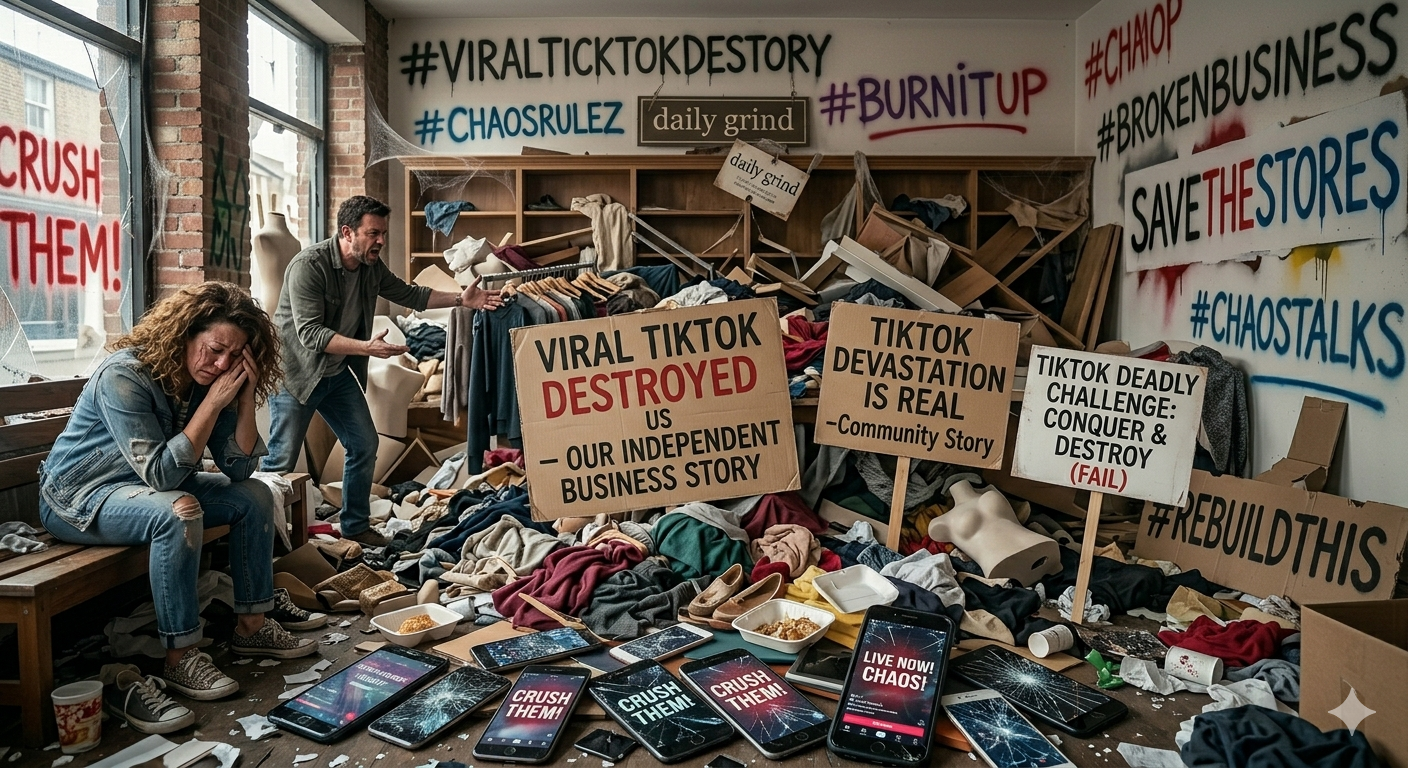
On a Tuesday afternoon in March, my phone started exploding.
A TikTok creator with 800,000 followers had posted a 15-second video of my soap. Just her hands, water, lather. No talking. No caption explaining what it was.
In the comments, people were losing their minds. ‘What product is this?’ ‘I need this.’ ‘Where do I buy???’ She hadn’t tagged me. Didn’t mention my brand. But people were finding me anyway.
I got 6,000 orders in 48 hours. I had inventory for maybe 300.
The Fear
I’ve seen the stories. Small business owners getting crushed by viral hits. Inventory runs out. Customers get angry. Chargebacks pile up. The business dies under its own success.
I was living that story in real time.
My fulfillment system was set up for 200 orders a week. I had orders stacking up faster than I could process them. Customers were checking out, assuming their order would ship in 2-3 days like my normal pace.
I had enough soap to fulfill maybe 10% of the orders I’d already taken.
For the orders I couldn’t fulfill, those customers would get refunded. Some would accept it. Others would post angry reviews. One-star reviews from people who were excited to buy and got disappointed.
That kills your ranking. That tanked my conversion rate. Viral becomes toxic when you can’t execute.
And the chargebacks. PayPal and Stripe do not care if you had good intentions. Refunded order that was never shipped? That’s a dispute. That’s a chargeback fee. That’s your account getting flagged.
If chargebacks hit 1% of your volume, payment processors can shut down your account. Goodbye business.
What I Did Wrong
I did what every panicked business owner does. I tried to save it with communication.
I sent an email to all customers saying order fulfillment would be delayed. I updated my homepage with a notice. I posted on Instagram about being overwhelmed.
It didn’t matter. Customer anger doesn’t care about communication. If someone paid for something and it doesn’t arrive on time, your apology email is noise.
I got one star reviews. ‘Product is great but customer service ignored me for two weeks.’ ‘Still waiting, been a month.’ ‘Charged my card and no update.’
Those reviews are still there. That was five months ago.
The problem wasn’t communication. The problem was that I let people buy something I couldn’t deliver.
The Inventory Horror
By day three, I had accepted 12,000 orders. I checked my actual inventory.
I had made 400 bars of soap.
I needed to deliver on 12,000 orders. Even if I worked 24 hours a day, even if I had help, I couldn’t fulfill orders for six months.
And in six months, people will have moved on. They’ll have bought soap from someone else. The viral moment will be dead.
So I did the only thing I could. I shut down the store.
I closed checkout. I added a message: ‘Temporarily sold out due to overwhelming demand. We’re restocking and will reopen in X days.’
That stopped the bleeding. But it also meant I was walking away from a moment. I could have been the thing everyone was talking about. Instead, I became the thing people couldn’t buy.
Why This Keeps Happening
Small businesses don’t plan for viral moments because viral moments are supposed to be rare. You hope it never happens. So you don’t prepare for it.
But the internet is broken now. One person with millions of followers can point at your product by accident and overnight you’re famous.
If you’re using TikTok, Instagram, or Pinterest at all, you should assume that’s coming. You should prepare for it the same way you’d prepare for a hurricane. It might not happen. But if it does, you need a plan.
The plan isn’t better customer service. The plan is order controls.
How to Survive Going Viral (When You’re Not Ready)
After the TikTok incident, I rewrote my entire fulfillment strategy. The core principle: never let people buy more than you can deliver.
I started with aggressive purchase limits. No more than 3 units per customer per week. It sounds restrictive. But it prevents one person from wiping out inventory and it spreads the available stock across more customers.
I implemented stock caps. My production capacity is 200 units per week. I set a hard cap: no more than 200 units available for sale at any given time.
This means if a product hits the inventory cap, it’s unavailable. Customers can add themselves to a wait list. But they can’t check out.
I used SmartOrderLimit to enforce both of these rules automatically. I don’t have to manually pull items from sale or monitor inventory in real time. The app does it. When inventory hits zero, the product goes unavailable. When someone hits the purchase limit, checkout stops them with a message.
The message isn’t apologetic. It’s not ‘sorry, we’re limiting you.’ It’s ‘to ensure fair access for all customers, maximum 3 per person per week.’
That’s messaging. That’s protecting your brand even while you’re protecting your inventory.
The Minimum Order Angle
I also set a minimum order. During the viral moment, I had a ton of single-product orders. One bar of soap. That costs me more to ship than I made in margin.
Now, minimum $20 order. Customers can buy one bar if it’s $20+, or they can buy multiple lower-priced items to hit the minimum.
This did two things. First, it made every order profitable. I stopped losing money on shipping. Second, it actually increased my average order value by 45% because customers filled up to meet the minimum.
What I Didn’t Do
I didn’t raise my prices. That’s what a lot of businesses do when something goes viral. Raise prices, reduce demand, manage supply.
That works for some businesses. But it’s also a path to resentment. People who bought before the viral moment paid less. People who buy after pay more. That’s not a good look.
Instead, I controlled volume with limits and minimums. Same prices. Fair access.
The Plan Nobody Wants to Think About
Here’s what you should do right now, before you go viral:
Figure out your production capacity. How many units can you actually fulfill per week? Be honest. Be conservative.
Set a hard inventory cap at 50% of your actual production capacity. If you can make 200 units per week, cap inventory at 100 units.
Set a per-customer purchase limit. 3-5 units is normal. It prevents hoarding without discouraging purchases.
Set a minimum order value that makes every order profitable. Don’t guess. Calculate it. Include all costs.
Automate enforcement. Don’t rely on manual checks or hope that you’ll remember. Use a tool.
The stores that handle viral moments aren’t the ones with the fastest growth. They’re the ones that stay sane.
What Happened Next
I reopened my store three weeks later with all these controls in place.
The viral moment was dead. People had moved on. My orders normalized to maybe 3x my baseline for a few more weeks, then back to normal.
But here’s the surprising part. The customers I got during that viral wave were better than before. Higher repeat rate. Higher satisfaction. Lower returns.
Because the people who bought were people who had to clear a $20 minimum, had to respect purchase limits, had to actually want the product. Not impulse buyers. Not resellers. Real customers.
And those controls? They’re still in place. Not because I’m viral anymore. But because they make my business work better.
My best month ever was the month of the TikTok viral moment. My second-best month was last month. And I didn’t have to sacrifice quality, margin, or customer satisfaction to get there.
The Real Lesson
Most businesses think about order controls as restrictions. Ways to say no to customers.
What I learned is that they’re actually protections. They protect your profitability. They protect your customers from disappointment. They protect your brand from being associated with failure.
You don’t implement them because you’re expecting a disaster. You implement them because you’re expecting success, and you want to be ready for it.
Learn more about order limits and inventory controls on SmartOrderLimit at https://smartorderlimit.com.